Coffee-to-Water Ratio: The Right Dose for Every Brew Method
The coffee-to-water ratio is the fastest way to a better cup at home. Here is the right ratio for pour-over, drip machines, Moccamaster, AeroPress, French press and cold brew with the Hario Mizudashi, plus a Warawul coffee to match each method.
Grinders and kettles get all the attention, but the fastest upgrade to your coffee at home costs nothing: dialing in your ratio.
The coffee to water ratio, sometimes called a brew ratio, controls strength, extraction and repeatability. It is written as coffee:water, so a 1:16 ratio means 1 gram of coffee for every 16 grams of water.
Why 1:16? Most coffee tastes best when the water pulls out somewhere between 18 and 22% of the coffee's soluble material (called the extraction yield), landing at a final strength of around 1.15 to 1.35% dissolved solids in the cup. Too little and the coffee tastes thin, sour or hollow. Too much and it turns bitter, harsh or burnt. A 1:16 ratio tends to land right in that sweet spot for most roasts and grind sizes, which is why it works as a starting point across almost every brew method below.
One tip before we get into it: weigh your coffee and water in grams if you can. Scoops and cups vary too much between beans and grinders to be reliable, and a kitchen scale removes most of the guesswork. Upgrading to a coffee scale like the TIMEMORE Black Mirror Basic 2.0 gets you more precise coffee-brewing without a huge price tag.
Here is how that baseline ratio shifts once you get into pour-over, drip machines, Moccamaster, AeroPress, French press and cold brew, plus a Warawul coffee we would recommend for each.
Pour-over ratio: 1:15 to 1:17
Manual brewing gives you the most control over the final cup, so the pour-over ratio has the widest acceptable range. Within that range, roast level is the main thing to adjust for: light roasts are denser and slower to give up flavor, so many home brewers move to a slightly stronger 1:15 to avoid a sour or thin cup. Dark roasts release flavor more easily, so 1:17 keeps things from tasting heavy or bitter.
A few reference points:
- 20 g coffee to 300 g water
- 25 g coffee to 400 g water
- 30 g coffee to 500 g water
Most people are happy landing in the middle, around 1:16, and adjusting slightly from there once they have tasted the cup.
Our pick for pour-over: Pimienta Honey, a honey-processed Bourbon Pimienta from Colombia. Its natural sweetness and juicy fruit come through clearly in a V60 or similar dripper, especially around that 1:16 mark.
Drip coffee ratio (automatic machines): 1:16 to 1:17
Automatic drip machines usually need a touch more water than manual brewing, because saturation is less even and brew temperatures vary more between machines. A dependable starting range is 1:16 to 1:17.
As a rough guide per cup of water (about 240 ml):
- 1 cup: 14-16 g coffee
- 4 cups: 56-64 g coffee
- 8 cups: 112-128 g coffee
If your machine runs hot and saturates evenly, you can lean toward the stronger 1:16 end. If the cup tastes bitter or heavy, move toward 1:17 or 1:18 instead. Most people under-dose their drip machine, which is the real reason drip coffee often tastes weak.
Our pick for drip coffee: El Rodeo Classic, a washed Castillo from the Reyes family in Colombia with notes of milk chocolate, plum and pomelo. It is one of the most reliable crowd pleasers on our menu and holds up well across a wide range of ratios, which makes it a forgiving choice for an automatic brewer.
Moccamaster ratio: 1:16
Technivorm Moccamaster machines are a bit of a special case among automatic brewers. They are built to hit specialty coffee benchmarks out of the box: a brew temperature in the 90-96°C range, a 4 to 6 minute brew cycle, and a shower head designed for even saturation. Because the machine already handles most of the compensating that a cheaper drip machine needs a weaker ratio for, you can brew a Moccamaster at the same 1:16 standard used for pour-over.
Example batches:
- 500 g water to 31 g coffee
- 750 g water to 47 g coffee
- 1 liter water to 62 g coffee
If a batch tastes off, grind size is the more likely culprit rather than the ratio itself.
Our pick for the Moccamaster: Cascaritas Classic, from Moisés Hidardo Hernández's farm in Honduras. It carries an unusually clear vanilla note alongside its classic caramel sweetness, and the Moccamaster's consistency lets those notes show up cup after cup.
AeroPress ratio: flexible by design
The AeroPress does not force you into one ratio the way most brewers do. Many recipes brew a strong concentrate, often somewhere around 1:8 to 1:12, and dilute it with hot water afterwards to taste. Others brew it closer to filter strength, around 1:15 to 1:16, and drink it as is.
If you are new to AeroPress, a reasonable starting point is 17 g coffee to 250 g water total (steeped, then pressed), which lands close to a normal filter strength cup without any dilution needed. From there, brew stronger and dilute if you want more control over the final strength.
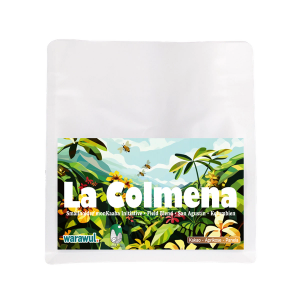
Our pick for AeroPress: La Colmena, a field blend from the monKaaba producer group in San Agustín, Huila. It is a versatile, balanced cup that works equally well brewed as a concentrate or at full filter strength.
French press ratio: 1:12 to 1:15
French press is full immersion: the grounds sit in contact with the water for the whole brew instead of water passing through a bed. That extra contact time and the lack of a paper filter mean more body and more oils end up in the cup, so the French press ratio runs stronger than most filter methods, typically 1:12 to 1:15.
A couple of reference points:
- 30 g coffee to 450 g water
- 40 g coffee to 600 g water
If the cup tastes weak, the ratio is usually too low. If it tastes muddy or heavy, check your grind size before you change the ratio.
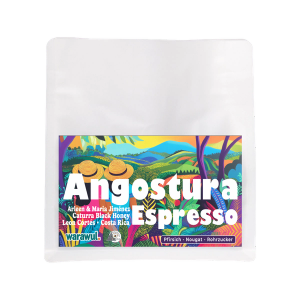
Our pick for French press: Angostura Espresso, a honey processed coffee from Arleen and Maria Jimenez in Costa Rica. Its body and sweetness hold up well to full immersion brewing, without turning muddy.
Cold brew ratio with the Hario Mizudashi: 1:11
Cold brew works differently from every method above, because there is no heat to speed up extraction. Steeping coffee in cold water for 12 to 18 hours needs a much stronger starting ratio, and the Hario Mizudashi is built around that concentrate approach: steep coarsely ground coffee at roughly 1:11 (for example 90 g coffee to 1100 g water for a 1 liter Mizudashi). You may dilute the finished brew with water, milk or ice to taste.
We have a full step by step Mizudashi recipe with timing and technique in our dedicated cold brew guide, so we will not repeat every step here.
Our pick for cold brew: Gitesi Espresso from the Gitesi Coffee Washing Station in Rwanda. Its stonefruit notes and sweet caramel body come through clearly in cold brew, without the sharp edge that lighter, brighter coffees can take on after that long a cold steep.
Coffee ratio cheat sheet
- Pour-over: 1:15 to 1:17
- Drip coffee (automatic machines): 1:16 to 1:17
- Moccamaster: 1:16
- AeroPress: 1:8 to 1:12 as a concentrate, or 1:15 to 1:16 at full strength
- French press: 1:12 to 1:15
- Cold brew (Hario Mizudashi): 1:11
The real point of a ratio
A ratio is a starting point, not a rulebook. It gets you into the right range quickly so you are not guessing from scratch every morning, but your water, your grinder and your own taste will always nudge the ideal number slightly one way or the other. Start with the numbers above, taste, and adjust in small steps from there.