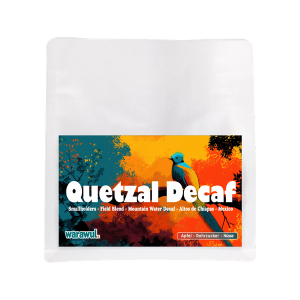
How Decaf Coffee Is Actually Made (And Why It Doesn't Have to Taste Boring)
Decaf isn't a downgrade. Learn how the Swiss Water, CO2, and sugarcane decaffeination methods work, and meet our Quetzal Decaf from Chiapas.

Say the word "decaf" in a coffee shop and watch what happens. Someone smirks. Someone apologizes for ordering it. Somewhere, a barista sighs and reaches for a bag that's been open since last month. Decaf has a reputation problem, and it's mostly undeserved.
The myth, and where it came from
For decades, decaf meant one thing: whatever beans were left over, run through a harsh chemical solvent, roasted dark to hide the damage, and stocked as an afterthought. That coffee earned its bad name honestly. But the process has moved on, and the "flat, bitter, watery" stereotype is describing a coffee that mostly doesn't exist anymore, at least not from roasters who take sourcing seriously.
The truth is simpler than the myth. Good decaf starts with good green coffee and a gentle process. That's it. There's no reason a decaffeinated coffee can't taste like the origin it came from.
Caffeine has no flavor, so where does the taste loss come from
Here's something worth knowing: caffeine itself is essentially flavorless in the concentrations found in coffee. Removing it shouldn't change the taste at all. When a decaf tastes muted or dull, the caffeine isn't the culprit. The process is.
Decaffeination involves steaming and soaking green coffee to pull the caffeine out, and that same process can also strip out sugars, oils, and aromatic compounds if it's done aggressively or with the wrong method. A rushed, high-heat, low-quality extraction damages flavor. A careful one barely touches it. The difference lives entirely in how the caffeine is removed, not in the fact that it's removed at all.
The three main decaffeination methods, explained simply
There's no single way to make decaf. Each method trades off cost, scale, and flavor retention differently.
Swiss Water Process
This method uses no chemical solvents at all. Green beans are soaked in a solution of water and green coffee extract that's already saturated with everything except caffeine. Because the water can't absorb more flavor compounds, only caffeine moves out of the beans. It's slow and it's favored by specialty roasters specifically because it protects flavor so well.
CO2 Process
Supercritical carbon dioxide, CO2 pressurized and heated until it behaves like both a liquid and a gas, is used to draw caffeine out of the beans. It's gentle on flavor and doesn't involve chemical solvents, but the equipment is expensive and only makes sense at large, industrial scale. You'll mostly see it used by bigger operations processing high volumes.
Sugarcane / Ethyl Acetate (EA) Process
This method uses a solvent derived from fermented sugarcane, most often produced near the coffee origin itself. It's common across Latin America, offers strong flavor retention, and costs less than the Swiss Water or CO2 methods. Despite "solvent" sounding alarming, the compound occurs naturally in many fruits and is used at levels considered safe, and it evaporates off well before the beans are dried and shipped.
None of these methods is objectively "the best." The right one depends on the bean, the scale, and what a roaster is optimizing for.
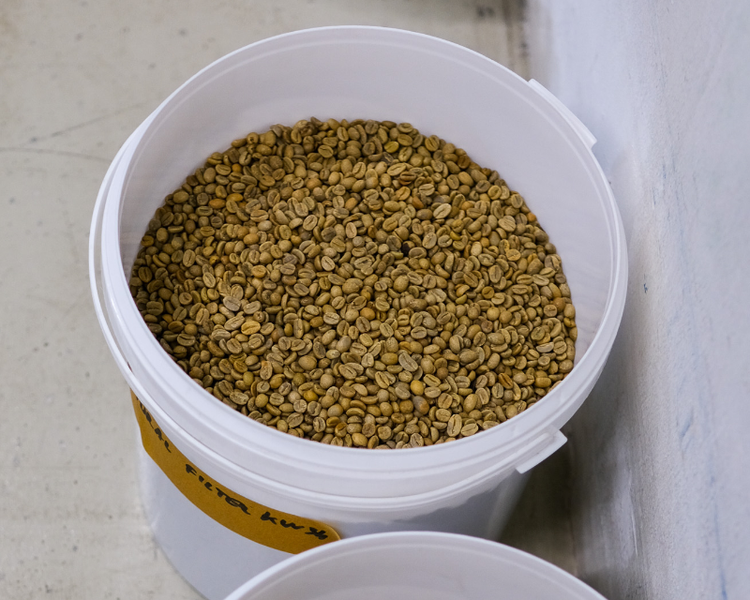
What actually happens to the bean in the decaffeination process
Regardless of method, the basic mechanics are similar. Green beans are steamed or soaked so their pores swell and open, which lets caffeine, and everything else, become soluble. Then the caffeine is pulled out, using water, CO2, or a solvent depending on the process. Afterward, the beans are dried back down to a stable moisture level for roasting.
The real risk in this whole process isn't decaffeination itself. It's over-processing: too much heat, too much time, or too aggressive an extraction that pulls out more than just caffeine. A well-run process, whichever method it uses, is calibrated to remove caffeine and leave the rest of the bean's character intact.
Sourcing still matters just as much
This is the part that gets skipped in most explainers: the decaffeination method is only half the story. A mediocre green lot will produce a mediocre decaf no matter how gentle the process is. There's no method that adds character to a bean that didn't have much to begin with.
Flip it around, and a great lot, grown well, processed carefully, and decaffeinated with care, will still show real origin character. Sweetness, acidity, body, all of it can survive if the input was good and the process respected it. If you want decaf that actually tastes like something, start by asking where the green coffee came from, not just how the caffeine was removed.
Case study: our Quetzal Decaf from Chiapas, Mexico
We introduced Quetzal Decaf in January 2026, and it's become proof of everything above. It's grown by smallholder farmers with Ensambles Cafés Mexicanos at 1,200 to 1,800 meters near the El Triunfo biosphere reserve in Chiapas, where shaded, biodiverse farming is the norm rather than the exception.
Quetzal is decaffeinated using the Mountain Water Process, developed by Mexican experts at Descamex and run on pure spring water sourced from Pico de Orizaba, Mexico's highest volcano. Green beans are steamed to open their pores, then soaked in that mineral-rich water, which draws out caffeine. The water is passed through filters that separate caffeine from the flavor compounds, removing up to 99% of the caffeine, and those flavor compounds are then reintroduced to the beans before drying. No chemical solvents touch the coffee at any point.
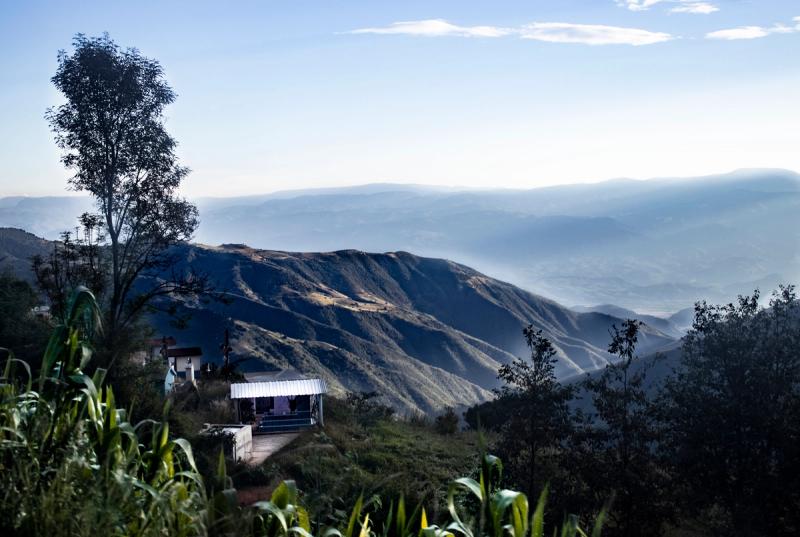
In the cup, Quetzal shows a gentle brown sugar sweetness, notes of dark chocolate and nuts, bright orange citrus, and a fine trace of warm spice. It's balanced and approachable, but it has real character, not the flat profile people expect from decaf.
On our menu, we treat Quetzal as an omniroast. It pulls a rounded, sweet espresso shot without the bitterness that dark-roasted decafs often carry, and it holds up just as well as a pourover, where its citrus and spice notes come through more clearly. Not many decafs can do both convincingly. This one does.
Coming this fall: a new decaf from CAFESMO in Honduras
Quetzal won't be alone for long. This fall, we're bringing in a new decaf sourced from the CAFESMO cooperative in Honduras, a group we're excited to build a long-term relationship with. We'll share more on the process, the farmers, and the tasting notes as launch gets closer, but if you've enjoyed Quetzal, this is one to watch for.
How to pick a decaf, and what to actually expect
If you've written decaf off before, here's a short version of everything above: check how it was processed (Swiss Water, CO2, and sugarcane/EA methods all retain flavor well when done properly), and check where the green coffee came from. Both matter. Neither one alone guarantees a good cup.
What you should expect from a well-made decaf is coffee that tastes like coffee: sweetness, acidity, and body that reflect its origin, just without the caffeine. If your last decaf experience was flat or bitter, that's a sign of a rushed process or a weak lot, not a limitation of decaf itself. Worth giving it another shot, ideally with a cup that was sourced and processed with the same care as anything else on the shelf.
FAQ
Does decaf coffee have zero caffeine?
No. Decaf coffee typically retains a small amount of caffeine, usually around 1 to 3 percent of the original content, depending on the method and how thorough the extraction was.
Is the Swiss Water Process better than CO2 or sugarcane decaffeination?
Not necessarily better, just different. Swiss Water uses no solvents and is prized for flavor retention, CO2 is chemical-free but expensive and used mostly at industrial scale, and sugarcane/EA offers strong flavor retention at a lower cost. Quality depends more on execution and green coffee quality than on which method is used.
Is ethyl acetate decaffeination safe?
Yes. Ethyl acetate occurs naturally in many fruits and is used at levels generally recognized as safe. It evaporates during processing, well before the beans are dried and roasted.
Why does some decaf taste flat or bitter?
Usually because of over-processing during decaffeination, a mediocre green lot to begin with, or a dark roast used to mask flavor loss. It's not because the caffeine is missing, caffeine itself is essentially flavorless.
Can decaf be used for espresso?
Yes. A well-processed decaf from a good lot, like our Quetzal Decaf, works well as an omniroast, meaning it's balanced enough for espresso and flavorful enough for pourover.