Inside the Gitesi Washing Station: Our Rwanda Coffee Documentary, Part Two
Part two of our Rwanda coffee documentary: inside the Gitesi washing station, from cherry sorting and fermentation to Aimé's community and sustainability initiatives. Watch Episode 2 on YouTube.

This is the second article in a three-part series about our video documentary on Chris's trip to Rwanda in April 2025. Episode two is live on our YouTube channel.
In part one, Warawul co-founder Chris and photographer Leon Fülber made it from Berlin to the Gitesi Coffee Washing Station in the hills above Lake Kivu, reunited with managing director Aimé Dusabe Gahizi, and tasted a ripe coffee cherry for the first time. In episode two, Aimé takes them beyond the farm and into the washing station itself, showing them what it actually takes to turn a cherry into the coffee in your cup.
Small farms, small quantities
The day starts with a steady stream of smallholder farmers bringing freshly picked cherries to Gitesi. It doesn't take long to notice just how small these quantities really are. Most of Gitesi's neighbors farm only a few dozen coffee trees, often alongside other crops that feed their families. Every batch that arrives at the station represents dozens of individual growers rather than one large operation, which is part of why the coordination at a washing station like Gitesi is so impressive.
From cherry to parchment coffee
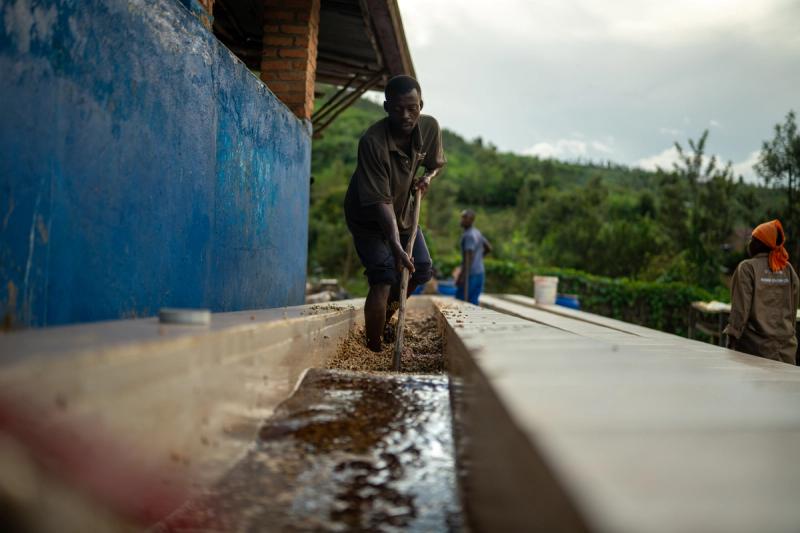
Once the cherries arrive, the real work begins. They're hand-sorted and floated in water to remove underripe and overripe cherries, since only the best cherries move on. Next comes pulping, which removes the outer skin, followed by fermentation, a delicate step that has to be carefully monitored to achieve the desired flavor profile.
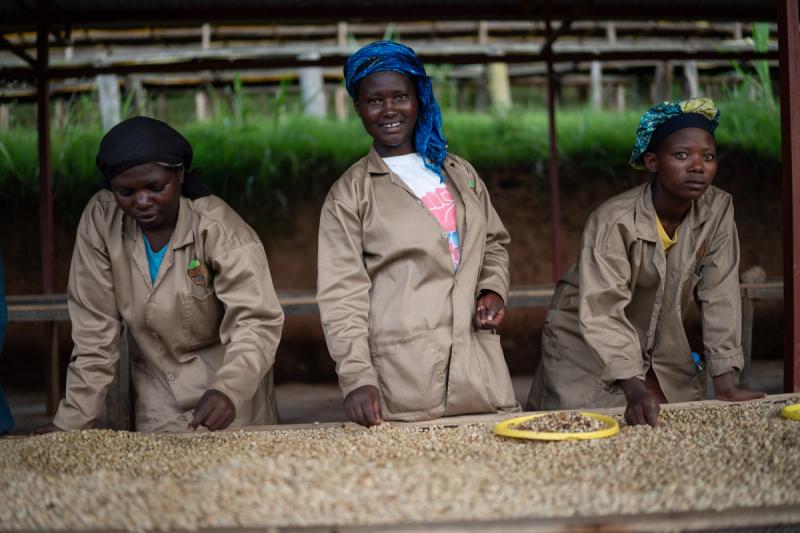
After fermentation, the cherries are washed and laid out to dry, with constant checks to monitor quality. Watching each step, Chris realized that good coffee doesn't happen by accident. It's the result of dozens of small, careful decisions made every single day.
More than coffee: community and sustainability
Aimé also showed Chris and Leon some of the initiatives Gitesi runs beyond coffee processing itself. Leftover coffee pulp is turned into organic fertilizer, which is then distributed back to the surrounding farmers who supply the station, closing the loop between the washing station and the community around it. Aimé, a trained civil engineer, also designed the washing station's own wastewater treatment system himself, a detail that shows just how much thought goes into running Gitesi responsibly, not only for the coffee, but for the land and the people around it too.
Coming up in episode three
In the final episode of the series, we wrap up the trip and tell you what it meant for the road ahead for Warawul. Stay tuned.