More Than a Bag: How We Bring Coffee Producers Into Our Berlin Café
A good cup starts long before it reaches your table. Here's how we make sure the people who grew it aren't invisible — from the photo wall in our Neukölln café to the name, photo and farm logo on every bag.

A really good coffee is grown, harvested, processed, sorted and dried by real people, long before it ever reaches a roaster — let alone a cup. It's easy to lose sight of that once a coffee is sitting in a bag on a shelf. At our café in Berlin-Neukölln, we've tried to build a few small, deliberate habits that keep the people behind the coffee visible, not just the coffee itself.
The photo wall
If you've sat down at our café, you've probably noticed the wall of portraits. These are photos of the producers, families, and collectives whose coffees we roast and serve — and most of them were sent to us directly by the producers themselves. It's their choice of image, their moment, shared with us to put a face to the name on the bag.
Two exceptions are our photos from Rwanda and Colombia. Those are images we shot ourselves, during trips our team took to visit the Gitesi Coffee Washing Station in Rwanda and the monKaaba producer group in Huila, Colombia.
Standing on a coffee farm or at a washing station with a camera in hand, taking in the surroundings with your own eyes and ears, is something completely different from cupping a sample at a table in Berlin. The wall is meant to show that we have consciously taken the time to travel to the places where the producers live and work, to get to know their families, and to experience the work on the ground firsthand.
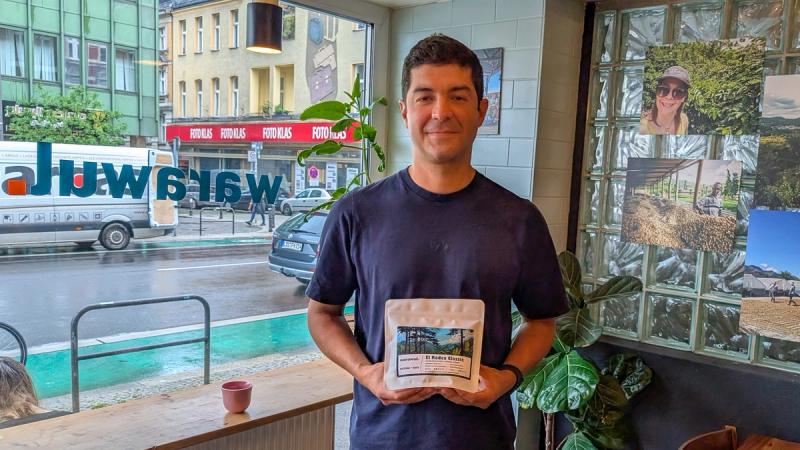
Photo above: Producer Cristian Reyes with a bag of his El Rodeo Classic. On the left, photos of the producers we work with.
What travels home with you
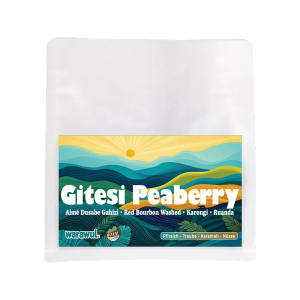
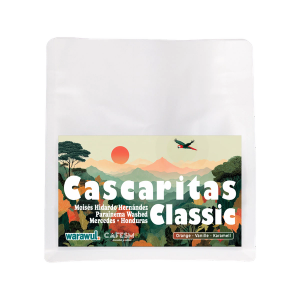
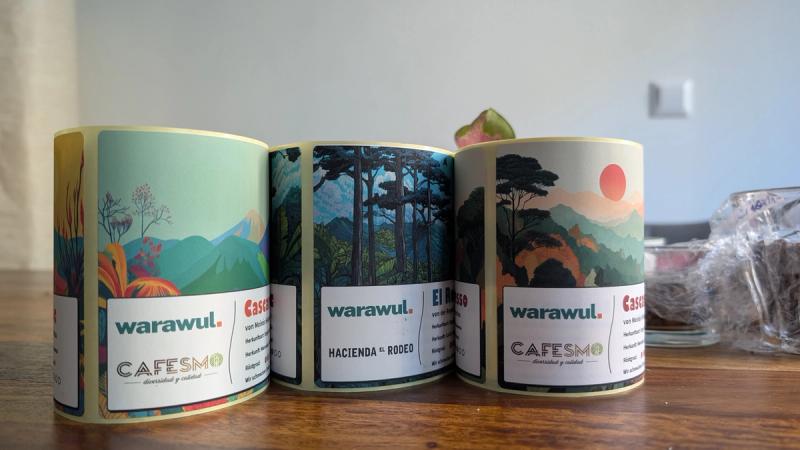
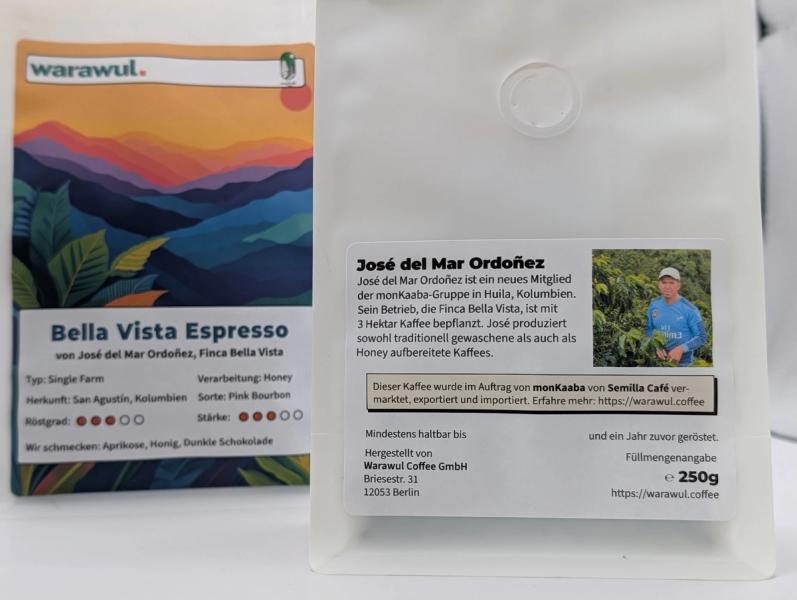
The wall is nice for the café, but most of our coffee doesn't get consumed on-site — it goes home in a bag. So the same principle carries over to the packaging: every bag of Warawul coffee carries the name of the producer or producers who grew it, their photo, a short blurb about who they are and how they work, and the logo of their farm or collective.
That means the credit doesn't stop at our door. If you buy a bag of Gitesi Peaberry from Aimé Gahizi in Rwanda or a Cascaritas Classic from Hidardo Hernández in Honduras, their name and story go home with you, sit on your counter, and are there every time you scoop out beans for a brew.
And that cool design that features on the front label? That's also done in collaboration with coffee producers, who tell us what's important to them or distinctive about their farm.
Why we do this
We asked co-founder Chris why this matters so much to us:
"When we think about specialty coffee, we too often think of coffee roasting. But we can only roast good coffee if the coffee bean itself is good. Before the coffee reaches us, so much human effort has already gone into it. That's why, for us, coffee is always a collaborative product in which the coffee producers must also be represented."
That's really the core of it. Roasting well is a craft, but it's a craft applied to something someone else already made carefully — sorted cherries, controlled fermentation, patient drying on raised beds. The best we can do at the roaster is not get in the way of that work, and then make sure the person who did it gets seen and named, not to mention paid well for their effort.
Read more about the people behind the wall
If a face on the wall or a name on a bag catches your eye, we've written more about many of these relationships:
- Our visit to the Gitesi Coffee Washing Station in Rwanda
- Meeting the monKaaba producer group in San Agustín, Huila, Colombia
- Our Transparency Report, showing what we actually pay producers relative to the market
Next time you're in the café, take a look at the wall before you order — and when you buy a bag to take home, flip it over and read who made it. It's a small habit, but it's one we think matters.