Washed Coffee: What It Is, Why Producers Choose It, and What It Tastes Like
Washed coffee is processed by removing the fruit before the seed dries. Learn how the method works, why producers choose it, and why it often tastes so clear and vibrant, with examples from our own coffee menu.

Coffee processing sounds technical, but the underlying question is simple: what happens to the coffee cherry after it is picked?
In a washed coffee, most of the fruit is removed before the seed inside the cherry is dried. That choice creates one of specialty coffee’s most recognisable cup styles: clear, structured, and full of detail.
This is part one of our series on coffee processing. Next, we will look at honey processing, followed by natural processing. There is no hierarchy here. Each method gives producers different tools and can create brilliant coffee when it is carried out with care.
What is washed coffee, and how is it processed?
A coffee cherry is a fruit, and the bean we roast is its seed. It is surrounded by skin, pulp, sticky mucilage, parchment, and a final thin layer called silverskin. Washed processing is the route that removes the fruit material relatively early, allowing the seed to dry cleanly inside its parchment.
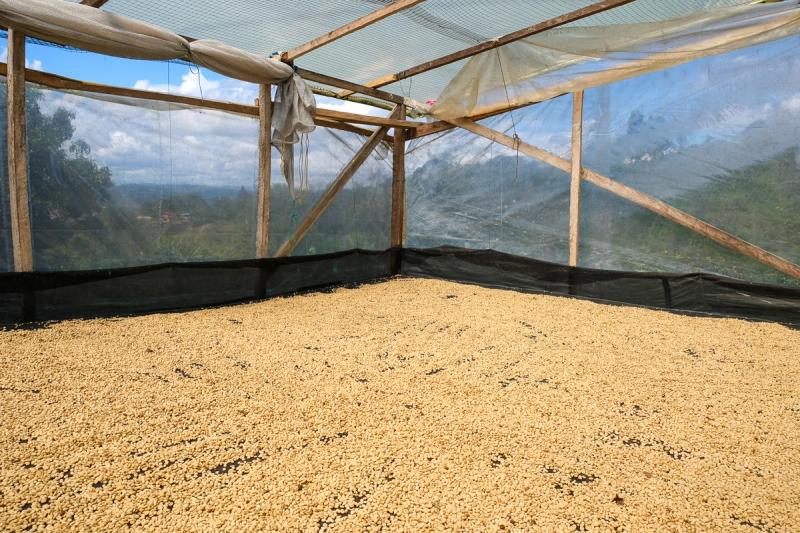
Photo below: A drying patio at Jaime Burbano’s Finca El Guayabo in San Agustín, Huila.
The exact workflow differs between farms, regions, and washing stations, but it generally follows these stages:
- Picking and sorting: Ripe cherries are picked and assessed. Sorting helps remove damaged, unripe, or overripe fruit before it affects the rest of the lot.
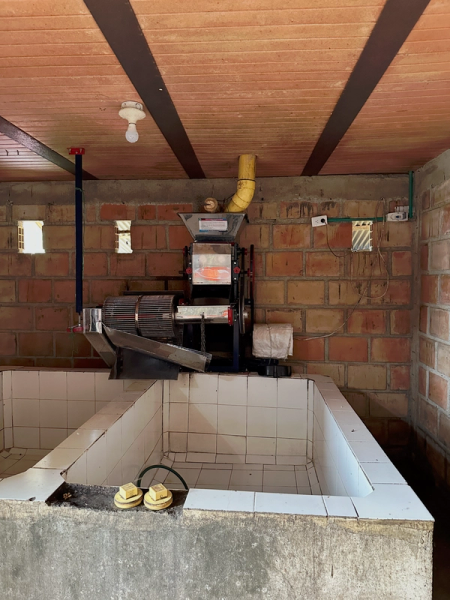
- Depulping: A mechanical depulper removes the skin and most of the fruit pulp. The coffee seed remains covered in a sticky, sugary layer of mucilage.
- Fermentation: The coffee rests in tanks or channels while naturally occurring microorganisms help break down that remaining mucilage. This is not an afterthought. Time, temperature, water, and the condition of the fruit all need close attention.
- Washing: Once the mucilage has loosened, it is washed away. What remains is parchment coffee: the seed still protected by its parchment layer, but no longer surrounded by fruit.
- Drying: The parchment is dried slowly and evenly, often on patios, raised beds, or mechanical dryers, until it reaches a stable moisture level. Only later is the parchment removed, revealing the green coffee seed that will eventually be roasted.
The word washed can make the process sound automatic. It is not. The quality of a washed coffee depends on dozens of decisions, from cherry selection to fermentation management and drying. “Washed” describes how the fruit is removed, not a fixed flavor outcome.
Photo below: A worker at Gitesi Coffee Washing Station pushes pulped coffee through a water channel to remove the mucilage
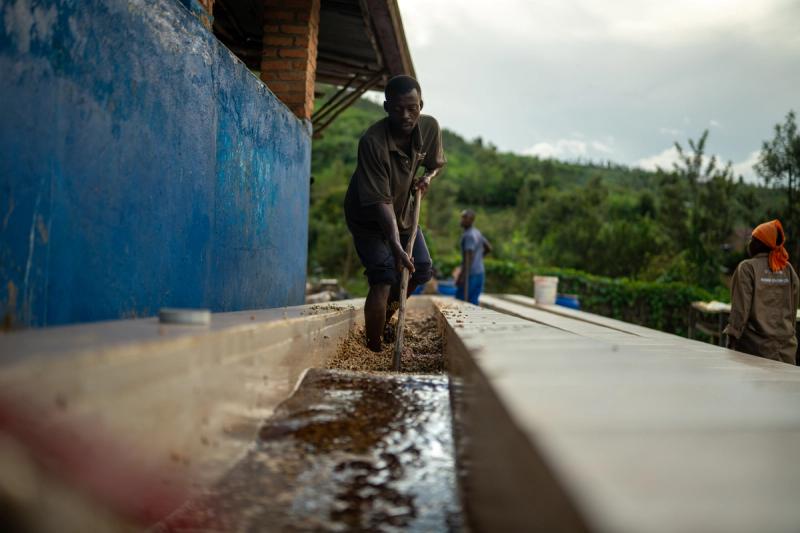
In this Instagram video, producer Aimé Dusabe Gahizi explains how fully washed coffee is processed at Gitesi Coffee Washing Station. https://www.instagram.com/p/DNxMR32QGxQ/
Why do producers choose washed processing?
For many producers, washed processing is a precise way to let the coffee’s own character come through. Once most of the fruit is removed, the final cup tends to place less emphasis on fruit fermentation and more on the combination of variety, growing conditions, and careful post-harvest work.
That can be especially useful when a producer wants a coffee’s florals, citrus, stone fruit, or delicate sweetness to be easy to read. It also makes it possible to work with a defined, repeatable sequence from cherry reception through drying. At a washing station, that structure matters when many farmers deliver cherries during the harvest.
Washed processing does require infrastructure, skilled labour, and close quality control. It also uses water, so responsible water use and wastewater treatment are essential parts of doing it well. At Gitesi Coffee Washing Station in Rwanda, for example, coffee pulp is turned into organic fertiliser and the station operates a wastewater treatment system designed by Aimé Dusabe Gahizi. Good processing is never only about the cup; it is also about the systems around it.
Photo below: A coffee pulper at José del Mar Ordoñez's Finca Bella Vista in Colombia. This gateway piece of equipment lets a small producer move from raw cherry seller to washed-coffee producer, which is usually the single biggest lever they have over their own income.
What does a washed coffee typically taste like?
No processing method writes a flavor note onto a coffee by itself. Variety, place, weather, fermentation, drying, roast, and how you brew all matter. Still, washed coffees often share a useful sensory pattern:
- Clarity: Individual notes can feel well defined rather than blended together.
- Lively acidity: Expect a brightness that can recall citrus, apple, or stone fruit. In a well-brewed cup, this is fresh and juicy, not harshly sour.
- Articulate florals and fruit: Delicate floral, tea-like, berry, or fruit notes can be particularly easy to identify.
- A clean finish: The aftertaste often feels crisp and precise.
That does not mean washed coffee is always light-bodied or delicate. It can be sweet, creamy, chocolatey, and substantial too. Think of the processing method as one part of the recipe, not the whole recipe.
Taste washed processing across our coffee menu
We have six washed coffees - some seasonal, some permanently on our menu - that show why “washed” should be a starting point for curiosity, not a shortcut to one expected taste.
Gitesi Espresso and Gitesi Peaberry
Both coffees come from the Gitesi Coffee Washing Station in Rwanda. Gitesi Espresso is our washed espresso roast, built around the clarity and lively character that make Rwandan coffee so exciting as espresso. With a careful dial-in, it shows bright stone-fruit character alongside caramel-like sweetness.
Gitesi Peaberry is a separate washed lot from the same station. A peaberry is a naturally occurring coffee seed that developed alone inside its cherry rather than as the usual pair. It is not a processing method, but tasting it alongside Gitesi Espresso is a good reminder that the same washed framework can still reveal different expressions of a coffee.
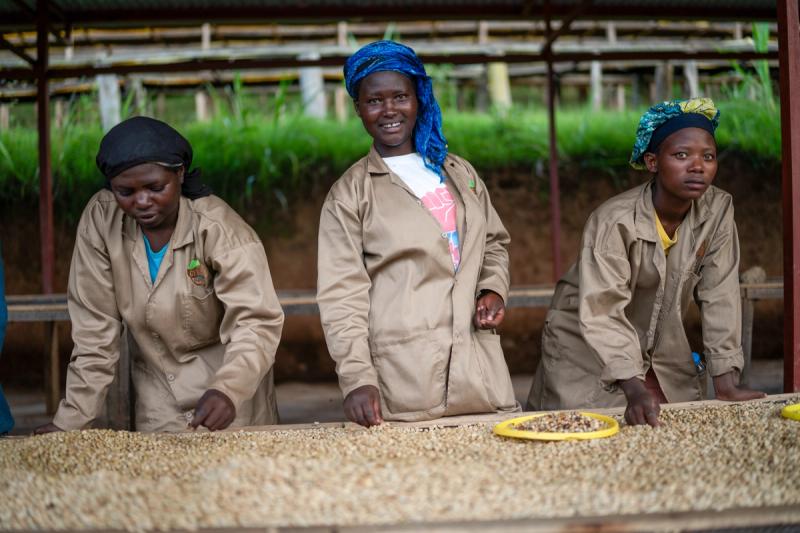
Photo below: Workers at Gitesi Coffee Washing Station sort coffee parchment to remove defects and foreign material.
La Colmena
La Colmena comes from the monKaaba producer group around San Agustín in Huila, Colombia. Its name means “the beehive,” a fitting image for a coffee shaped by collective work. Here, washed processing offers a clean, approachable expression that makes La Colmena an easy coffee to return to across different brew methods.
Photo below: Drying patio at Gloria Ortega’s Finca El Progreso in San Agustín, Huila.

Cascaritas Classic
Cascaritas Classic is a washed Parainema from Moisés Hidardo Hernández in Honduras. If you know his more experimental Cascaritas lots, the Classic is a useful counterpoint: a coffee where the processing stays focused on a clear, sweet, everyday cup. We find orange, vanilla, and a caramel-like finish in it.
El Rodeo Classic
El Rodeo Classic is a washed Castillo from the Reyes family at Hacienda El Rodeo in Curití, Santander, Colombia. It is a particularly good example of how much comfort and structure a washed coffee can have: milk chocolate, plum, and pomelo, with a profile that is clean and versatile rather than fragile.
Las Juntas
Las Juntas is Diever Galindez’s washed Pink Bourbon from the monKaaba group in Huila. Pink Bourbon is known for expressive aromatics, and the washed process gives its floral, high-toned character room to speak clearly. It is proof that a clean cup can still be vivid, layered, and memorable.
The point is not to expect one flavour
If you see washed on a coffee bag, expect a clue, not a guarantee. It tells you that the fruit was removed before drying and that the producer chose a route that can foreground clarity and definition. It cannot tell you everything about the cup.
The best way to understand it is to taste across coffees. Brew a chocolate-and-plum-led El Rodeo Classic beside the citrus-and-caramel character of Cascaritas Classic, or explore the different Rwandan expressions in Gitesi Espresso and Gitesi Peaberry. The similarities will make sense, but so will the differences.
Next in the series: honey processing, where some of the sticky fruit mucilage stays with the seed during drying, creating a different balance of clarity, sweetness, and body.