Why we founded Warawul
We are Warawul, a new coffee roaster in Berlin. We want to establish true partnerships with coffee producers. With our Co-Branding approach, we want to bring real transparency into the world of coffee. Read more about why we founded Warawul.

Why embark on the journey of starting a coffee company, you might ask? It’s a valid question. The coffee industry is already saturated with roasters, and venturing into business is no easy feat, as anyone who has undergone this process can attest. It becomes even more challenging when juggling our daytime jobs and caring for young children.
Having savored meticulously brewed pour-overs from diverse origins in trendy cafes across Bangkok or Los Angeles during our travels, Anabel and I were excited to see the emergence of a specialty coffee scene in our home city of Berlin. While we celebrate the burgeoning coffee scene that values the nuanced flavors of quality beans, we can't ignore a glaring contradiction that we are determined to address through Warawul.
Looking for transparency in specialty coffee
Specialty coffee embodies the idea that, through meticulous work across all stages of the coffee value chain, the once mundane cup of joe, drowned in sugar to be palatable, can transform into a delightful adventure for our taste buds, rich with fruity and spicy notes.
This is only possible through the meticulous work growing the coffee trees, harvesting only the ripe fruits at the right time, and then using complex processes to transform the coffee fruit to green coffee.
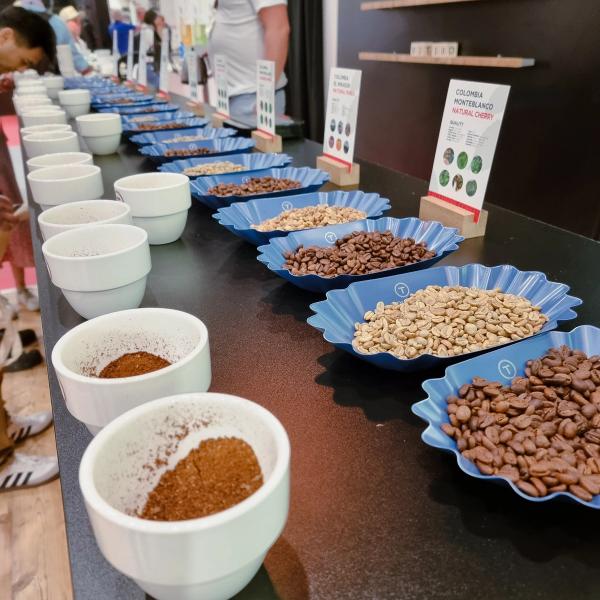
Yet, I asked myself: Why is it then, that this work, the farming and processing of the coffee beans, is often invisible to us, the coffee drinkers? More often than not, the producer's name is relegated to a mere footnote on the coffee label, sandwiched between other information.
Transparency is a word that is frequently used in specialty coffee. One of the key differences between industrially roasted coffee and specialty coffee, many claim, is that in specialty coffee, the origins of the coffee can be traced and are transparent.
But if specialty coffee is indeed superior to anonymous blends from industrial roasteries, it feels strange to omit the producers and the farmers from the equation. At times, it seems as if roasters, are merely slapping their logos on the coffee, thereby branding it as their creation and erasing all the work that went into coffee beans.
Worse still, sometimes the farmers' photos are used on websites and instagram accounts without having a personal connection to the farmers, without knowing the context in which the photos were taken, and without explicit consent for marketing.
Diving right into the specialty coffee scene
When my brother and I contemplated the idea of doing something in coffee, we decided to plunge head first into the specialty coffee scene by attending World of Coffee 2022 in Milan. The experience was a whirlwind of roasters, baristas, producers, and equipment vendors, all gathering in one place.
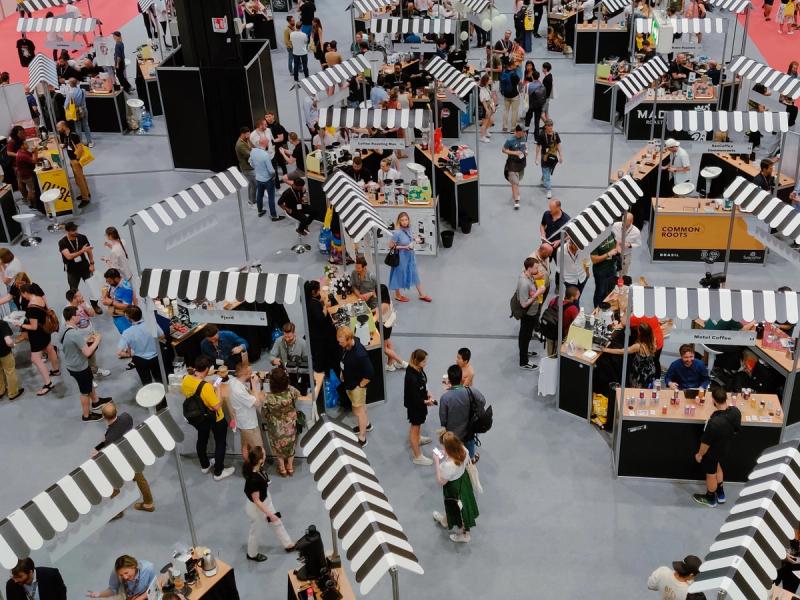
One conversation with a roaster stood out. They admitted to not knowing the producers of their specialty coffee, instead branding it by origin country. While this approach is of course fine, as a coffee enthusiast buying expensive specialty-grade coffee, I want to understand why I'm paying a premium over commodity coffee. I want to know how the coffee was created and what sets it apart. I want to know what the producers idea and inspiration was when they created the coffee.
I also want to know whether the producer receives the share of the money spent on this coffee, they deserve as the creators of it. I want to be sure that my enjoyment of a cup of coffee does not come at the cost of exploitation of others.
A comparison with wine producers
Returning from World of Coffee brimming with ideas, two influential sources shaped my thoughts. First, I started listening to Lucia Solis’ podcast “Making Coffee”, which has been a true inspiration ever since. In her podcast, Lucia does not only talk about techniques of processing coffee from a scientific perspective, but also frequently shares her insights on the specialty coffee industry and its prevalent imbalances in the relationship between the producers and the roasters of coffee.
Coming from a background as a former winemaker, Lucia highlighted the stark difference between the recognition given to wine producers and the invisibility of coffee producers. This disparity extends to the economic aspect. If producers are merely exchangeable names on labels, they cannot set prices reflecting the quality of their work.
When fair coffee is not fair
The coffee trade is based on the commoditization of coffee, that is making coffee beans completely interchangeable from one another. The global price for Arabica coffee is set on the stock market in New York.
Karl Wienhold's book, "Cheap Coffee," illuminated the race to the bottom driven by this commoditization of coffee. If there is only one price for coffee, what then determines this price? The answer is production costs, not quality. Following basic economic theory, the price is set by the producers with the cheapest production costs as they can undercut their competition. In consequence, for most coffee producers, growing coffee does not generate wealth.
This has often led us coffee drinkers down the road of paying higher prices for coffee as a charity to improve the lives of producers. The word fair trade might sound good at first glance but is frankly disturbing when you take a closer look. The cheap prices we pay keep producers in dire financial conditions. To make ourselves feel better, we add a few cents as charity. Can you imagine adding a couple of Euros to the price of your Bordeaux or Chianti to support the winemaker in need?
Specialty Coffee with Purpose
We believe that specialty coffee can overcome this old, exploitative system. Specialty coffee gives coffee its own value by evaluating it based on taste. This enables producers to compete on quality, not just on having the lowest production costs. However, that's just one part of the puzzle.
We aim to ensure that the people behind coffee production are appreciated for their craft. For us, the meticulous work of producers is the most crucial factor in producing quality coffee. This recognition must translate into financial benefits for producers and be visible to end consumers.
This is why we founded Warawul. We want to unveil the veil over the coffee value chain.
We engage in a true partnership with producers, implementing co-branding for the coffees we sell. This approach not only provides producers with a platform to make their own brands visible but also allows curious coffee drinkers to learn about how the coffees are cultivated directly from the producers.
Moreover, co-branding, for us, means that everything we say about the coffee, as well as the images and content we use on our website or social media, is always discussed with and agreed by the producers. We also financially compensate them for the use of their images and content.
For us, this partnership represents the future of specialty coffee. Whether we succeed in this endeavor remains to be seen, but we believe it's worth a try. Together, we strive to create a better specialty coffee industry and provide everyone who enjoys our coffees with a joyful and unspoiled experience.